

By Virginia M. Wright
From our May 2012 issue, updated April 2023
We have met the enemy, and she is the blackfly. She is a mindless, merciless eating machine, and what she wants to eat is you. What she lacks in physical heft is more than offset by her numbers. She and her sisters — for the biters are all female — attack in ferocious, ruthless, maddening swarms. They will turn you into a bloody, itchy, swollen mess if they don’t drive you crazy first. It is not enough to meet your enemy. You must also know her. Know her, and you might stand a chance.
The Basics: Meet the Blackfly!
A member of the insect family Simuliidae, the blackfly is a small hump-backed fly barely one-eighth of an inch long. Roughly forty species live in Maine, but only a handful of them bite humans. Females seek a blood meal to nourish their developing eggs, which they lay by the hundreds in fast-moving creeks and rivers. Males are placid, feeding only on the nectar of flowering plants. Do not, however, give the guys a pass as you assign blame for the misery inflicted upon your flesh. They breed with the blood-thirsty females, after all, and that creates blood-thirsty female babies.

The grub-like larvae emerge from the submerged eggs in early spring and, with silk manufactured by specialized glands, they attach their posterior to rocks, logs, and other objects in the river. So anchored, they flutter in the current like flags in a stiff breeze. Their heads are crowned with a pair of tiny transparent fans — the blackfly version of beanie copters — that net particles of food in the water and feed it to their mouths. After passing through seven larval stages over a period of a few weeks, the adults emerge. They rise to the water’s surface, unfold their wings, and fly in search of food. They are strong fliers, with a range of up to 10 miles if wind conditions permit.
The Season of the Itch
Blackfly season is said to run from Mother’s Day to Father’s Day, but, in reality, blackflies are not strictly a springtime nuisance. “It depends on the species,” says Leon Tsomides, an aquatic entomologist with the Maine Bureau of Land and Water Quality. “Generally, they emerge in spring, have one generation, and are gone by July. But there is a species on the Penobscot River, and a few other places, that has multiple generations. So people who live in the Winn and Lincoln area may have blackflies all summer long because new generations keep emerging.” What’s more, the season varies with the weather. Blackfly larvae hatch sometime after the spring thaw when river temperatures rise, phenomena that vary not only from region to region, but also from year to year.
My, What Big Teeth You Have!
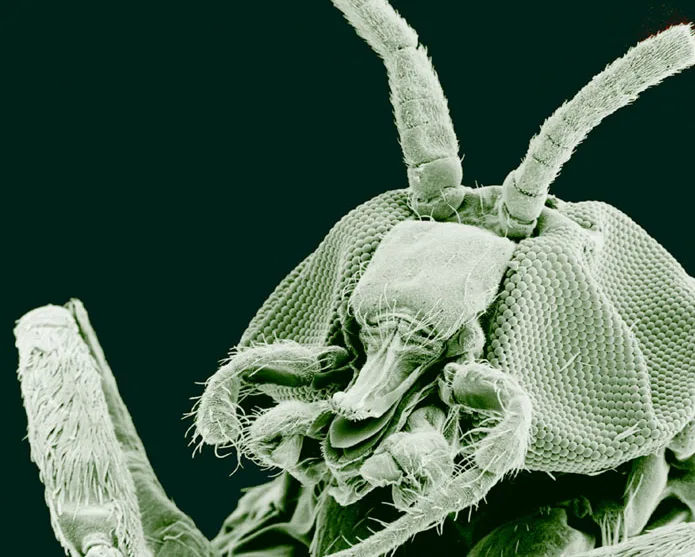
Consider the blackfly’s mouth: It is equipped with a pair of serrated jaws that work like scissors to pierce and cut skin, a barbed structure called a syntrophium with which the blackfly anchors herself in the wound, and pump-like muscles to lap up the pooling blood. The needle-like proboscis through which the mosquito delicately sips her meals seems refined by comparison. To add insult to injury, as the blackfly chews upon your flesh, she bathes it in her saliva, which contains an anticoagulant to keep your blood flowing and, even more insidious, an anesthetic so you don’t feel a thing. This is not for your benefit. Rather, it buys her time to finish her meal safely. You’ll feel the effects soon enough.
Every Species of Maine’s Most Irritating Pest, Ranked!
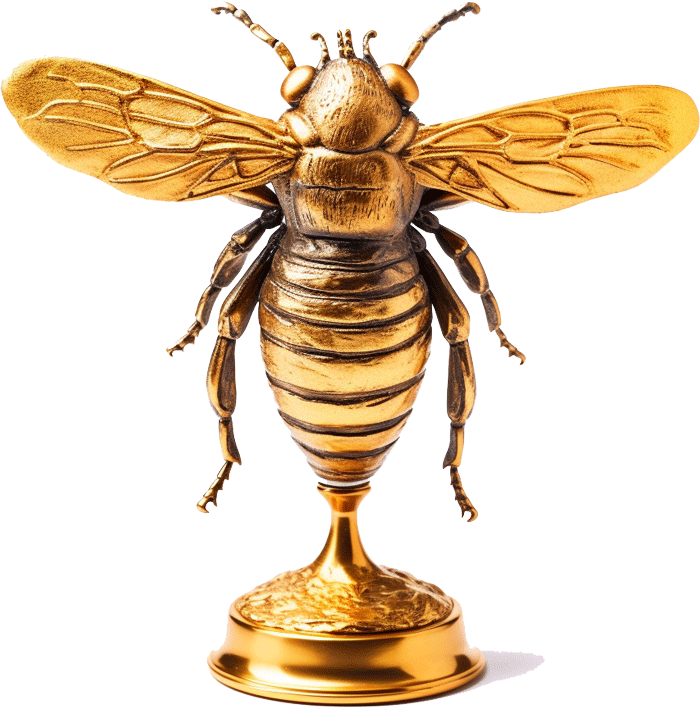
Oh, you thought there was just one variety of the tiny, swarming, ferocious scourge ruefully hailed as Maine’s unofficial state bird? Think again: the state is home to upwards of 40 species of blackflies. An exact number — and just which are most prevalent and prone to bite humans — is a moving target, says entomologist Tom Schmeelk, of the Maine Forest Service, because the most thorough blackfly research is a few decades old. But here’s an assessment based on our best understanding.
#1–34
Prosimulium decemarticulatum, Prosimulium fontanum, Prosimulium fuscum, Prosimulium gibsoni, Prosimulium magnum, Prosimulium pleurale, Prosimulium rhizophorum, Prosimulium saltus, Cnephia abditoides, Cnephia dacotensis, Cnephia denaria, Cnephia invenusta, Cnephia mutata, Simulium anatinum, Simulium aureum, Simulium corbis, Simulium croxtoni, Simulium decorum, Simulium emarginatum, Simulium euryadminiculum, Simulium excisum, Simulium furculatum, Simulium gouldingi, Simulium impar, Simulium innocents, Simulium latipes, Simulium parnassum, Simulium pictipes, Simulium pugetense, Simulium quebecense, Simulium rivuli, Simulium rugglesi, Simulium verecundum, Twinnia tibblesi
As Schmeelk reminds, the world is full of blackflies — some 2,100 species in 35 genera — and only 10 to 20 percent bother humans or livestock. Many species feed on bird blood; others don’t take blood meals at all. The species above are least likely to pester humans. Carry on, gnats.
#35
Prosimulium multidentatum
Technically, as innocent as those above, but hard pass on the name. All biting blackflies have serrated jaws to tear at flesh, but multidentatum? Sounds extra bite-y.
#36
Simulium tuberosum
Not a likely human biter, but according to the state’s Maine Aquatic Biodiversity Project, these blackflies are found in more Maine watersheds than any other species, and other research has suggested they hang around for the longest stretches of spring and summer. So they’ve probably annoyed you at some point.
#37–41
Simulium jenningsi, Simulium fibrinflatum, Simulium nyssa, Simulium penobscotense, Simulium vittatum
They’ll swarm and vex and bite humans, but these species would rather feed on hosts like deer and moose, so they might leave you be if their preferred victims are around.
#42–43
Prosimulium mixtum, Simulium venustum
These little monsters, Schmeelk says, are the two most common biters of humans, and the latter is particularly widely distributed. Blame them for your itchy, swollen lesions, and curse their ironic name: venustum means “lovely.”
Four Fun Ways That Blackflies Find You
- Your breath. Blackflies detect carbon dioxide in your exhalations. This likely explains their tendency to swarm around your head.
- Your temperature. Blackflies are drawn to a warm body.
- Your wardrobe. Blackflies are attracted to dark colors. “My conjecture is that most of the animals they go after are dark,” says Charlene Donahue, an entomologist with the Maine Forest Service. “It’s something they’ve evolved with.”
- Your certain je ne sais quoi. “Some people seem to be more attractive to blackflies than others,” Donahue says. “There is probably some chemical involved, but we don’t know what it is.”
Defensive Measures: Keeping Blackflies at Bay
- Cover up. Wear head nets and long sleeved-shirts and pants in light colors.
- Mind the forecast. Avoid the woods on cloudy days when blackflies are more active. Bright sun and breezes seem to keep them at bay.
- Use insect repellents. Those containing DEET work best.
When That Doesn’t Work: Symptoms and Treatment
The blackfly’s brutal butchery makes itself known within the hour. Her saliva also happens to be an allergen, so the bite site (and there is rarely just one) itches intensely and swells much like a mosquito bite with the added attraction of a noticeable wound in the lump’s center. The worst of the itching subsides within a day or so, but has a way of flaring up days, even weeks later.
Treatment is the same as with other bug bites: Wash with soap and water to prevent infection and apply ice to reduce the swelling and numb the pain and itching. Over-the-counter topical ointments like calamine and Benadryl cream provide more lasting relief.
Can Anything Be Done? Sure, in Pennsylvania.
Unlike Pennsylvania, which has a substantial blackfly suppression program that involves aerial spraying of Bti (bacillus thuringiensis israelensis) to kill blackfly larvae, Maine does not wage war against the blackfly. Experiments with Bti at Sugarloaf Resort in the 1980s were controversial, pitting environmentalists against promoters of tourism. Even if objections to dumping pesticides into our waterways are put aside, the effectiveness of such an effort is doubtful given the sheer number of rivers and streams in Maine and the fact that blackflies, with their strong flying abilities, can readily recolonize other areas.
Four Silver Linings
- A healthy blackfly population is a sign of good water quality. Maine had few blackflies in the 1960s when its rivers were heavily polluted.
- Maine blackflies do not carry diseases. “One of the good things about living in a cold climate is you short-circuit disease-vectoring by insects,” Donahue says.
- Blackflies are food for creatures we like. Trout eat their larvae. Birds and bats eat the adult flies.
- Blackflies can be monetized for a good cause. Just ask the Maine Blackfly Breeder’s Association (official greeting: May the Swarm Be With You), a Machias charity organization that raises money through the sale of gear featuring a large blackfly and the words “Blackflies: Defenders of the Wilderness.”